Talk to an ESG Expert about how Presgo can help you!
Our ESG Experts are on-hand to understand your ESG Reporting needs and cater our solution to you. Get in touch to discuss how we can help.
Talk to an ESG ExpertContents
- What is a materiality assessment?
- What is a materiality matrix?
- Single Materiality and Double Materiality
- What happens to a company without a materiality assessment?
- How to Conduct a Materiality Assessment: Key Questions to Ask
- What are the challenges of materiality assessment?
- Is materiality assessment a requirement for companies?
- Case Studies: Businesses that Conducted Materiality Assessments
- Accurate ESG Materiality Assessments with Presgo
Sustainability is now at the heart of every business decision-making, and companies need to know which sustainability issues are worth focusing on. Consumers, employees, investors, and regulators expect organisations to act on what’s crucial to society and future generations. In reality, there are more sustainability topics than any organisation can effectively address and more stakeholders than any single survey can capture. It can be quite overwhelming.
The process of identifying what genuinely matters and defending that judgment is where most organisations need to strategise and build. This growing need for alignment with societal values is where a materiality assessment comes in.
What is a materiality assessment?
A materiality assessment is a process that helps companies identify and prioritise key sustainability issues based on their environmental, social, and governance (ESG) impact. It comes from the concept of material issues — topics that are significant enough to affect a company’s corporate sustainability. It evaluates both the potential risks to a company’s financial performance and the effects its operations have on society and the environment.
This assessment involves engaging stakeholders to address the most relevant topics in sustainability strategies and reporting. By considering these critical issues, companies can make more informed decisions that align with both business goals and societal expectations.
What is a materiality matrix?
A materiality matrix is a graphical representation used to assess and prioritise issues based on their importance to both the company and its stakeholders.
The materiality matrix is, in essence, the visual outcome of a materiality assessment. While the materiality assessment is the process of identifying and evaluating the most significant ESG issues for a company, the materiality matrix maps those issues according to their importance to both stakeholders and the company.
It typically displays these issues on a graph, with one axis representing the significance to stakeholders and the other showing the impact on the company’s success. By gathering stakeholder input through surveys or questionnaires, companies can compare their views with external expectations to identify key ESG factors to focus on. This helps guide strategies and makes sure that a company’s actions align with the most pressing social, environmental, and governance concerns.
Single Materiality and Double Materiality
Single and double materiality are two approaches for evaluating sustainability issues, with a distinct focus on financial and broader societal impacts. The key difference lies in whether a company considers only how sustainability issues affect its financial performance or also includes the wider effects its operations have on the environment and society.
Single Materiality or Financial Materiality (Outside-In)
Single materiality only focuses on how external sustainability issues, like climate change or resource scarcity, directly impact a company’s financial performance, such as costs, revenues, or asset value. This perspective is essential for investors looking to assess risk to the company’s profitability and future growth.
Double Materiality or Impact Materiality (Inside-Out)
Double materiality adds another perspective by also considering the broader impact of the internal company activities and operations towards the external environment and society. It evaluates how a company’s operations contribute to issues like climate change or social inequality, affecting stakeholders beyond the organisation.
What happens to a company without a materiality assessment?
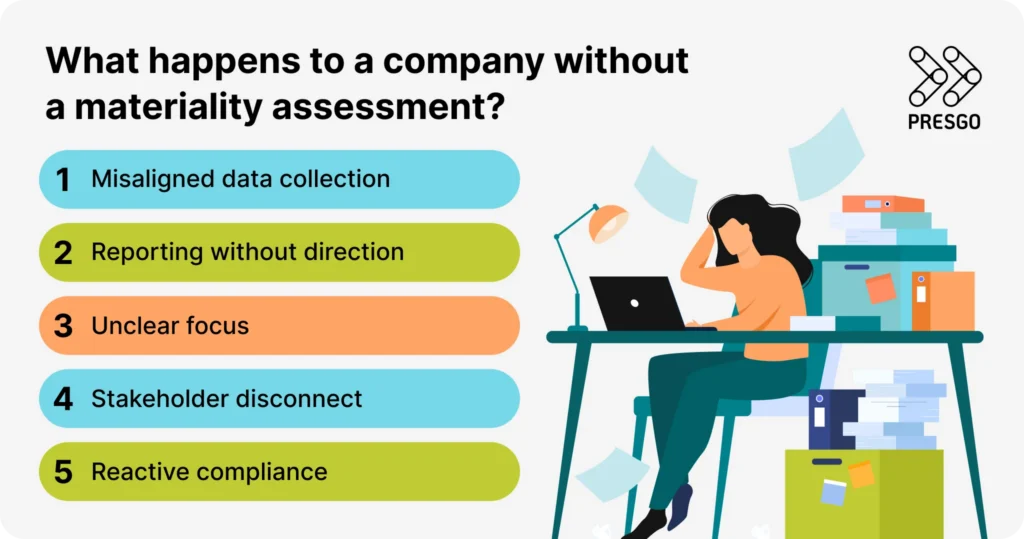
Without a materiality assessment, a company loses the foundation that gives ESG reporting its impact and purpose.
Misaligned data collection
Without defined material topics, teams end up tracking metrics that don’t connect to actual risk or business impact. The data gets collected, but it doesn’t map to the decisions that need to be made, deepening the gap in every reporting season.
Reporting without direction
ESG frameworks provide structure, but they don’t tell a company what matters most in its specific context. Organisations that skip materiality assessment often default to framework checklists, disclosing only what is asked without genuine significance to their operations and stakeholders.
Working on disclosures with a clear purpose, IKEA’s FY24 sustainability reporting discloses taking on CSRD’s double materiality assessment process. It ties its materiality work to its clear business direction on making IKEA more affordable, accessible, and sustainable with the management of its entire value chain system.
Unclear focus
Without a defined set of material topics, sustainability programs expand to cover everything adjacent to ESG. Leadership has no clear basis for prioritizing one initiative over another, and resources get spread across issues that carry no strategic weight.
Stakeholder disconnect
Reporting that isn’t grounded in stakeholder input tends to disclose what the company finds comfortable rather than what its investors, employees, and communities actually need to know. That gap erodes credibility over time, even when the numbers are technically accurate
Nestle is an example of a global company that connects with its stakeholder groups. Through its Creating Shared Value strategy, it engages with employees, consumers, suppliers, organizations, government bodies, and investors, among others, that give insights to strengthen its materiality assessment.
Reactive compliance
Companies without a materiality foundation tend to scramble when regulations change. Because their reporting isn’t built on a clear understanding of what’s material to them, every framework update requires rebuilding from scratch instead of continuously adapting.
How to Conduct a Materiality Assessment: Key Questions to Ask
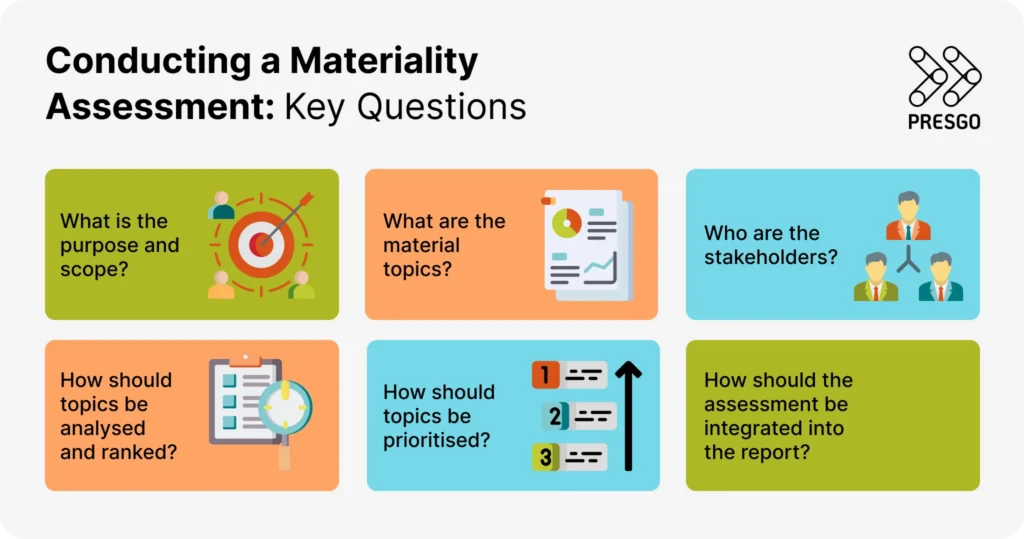
To conduct an effective materiality assessment, businesses must identify the most critical ESG topics that impact their strategy and stakeholders. This will involve systematically gathering insights, prioritising issues, and aligning the results with business goals. Below are the key steps in the process:
What is the purpose and scope?
Begin by setting clear objectives for the assessment. Understand what “materiality” means for your organisation — whether it is to identify risks, improve sustainability strategy, or inform corporate reporting. Additionally, outline the scope of your assessment, including which business units, regions, or stakeholders will be involved.
What are the material topics?
Compile a list of potential ESG topics from a variety of ESG issues and sources such as media, reports from industry leaders and competitors, and internal data. Engage with key internal departments and external experts to secure a comprehensive list and include topics for these areas, such as waste management, GHG emissions, human rights, diversity, and risk management.
Who are the stakeholders?
Identify which stakeholders should be consulted to gather diverse perspectives. Employees? Investors? Customers? Their input through engagement will highlight issues that might otherwise be overlooked. Prioritise stakeholders based on their influence or the significance of their concerns to your business and its long-term sustainability.
How should topics be analysed and ranked?
Gather feedback from stakeholders and analyse each topic’s relevance and potential impact on the business. Assess the social, environmental, and economic significance of each issue and align them with the company’s strategic goals. Rank topics based on their importance, considering both stakeholder input and business priorities.
How should topics be prioritised?
Use a materiality matrix to plot the identified topics, categorising them based on their importance to both stakeholders and the business. This helps in visualising the issues that require immediate attention. Integrate the prioritised topics into your organisation’s ESG strategy, ensuring they guide decision-making and resource allocation moving forward.
How should the assessment be integrated into the report?
Once the impactful issues and findings are integrated into the ESG strategy, this can be moved forward into the sustainability report, addressing the priorities and integrating the assessment into the sustainability frameworks for compliance.
What are the challenges of materiality assessment?
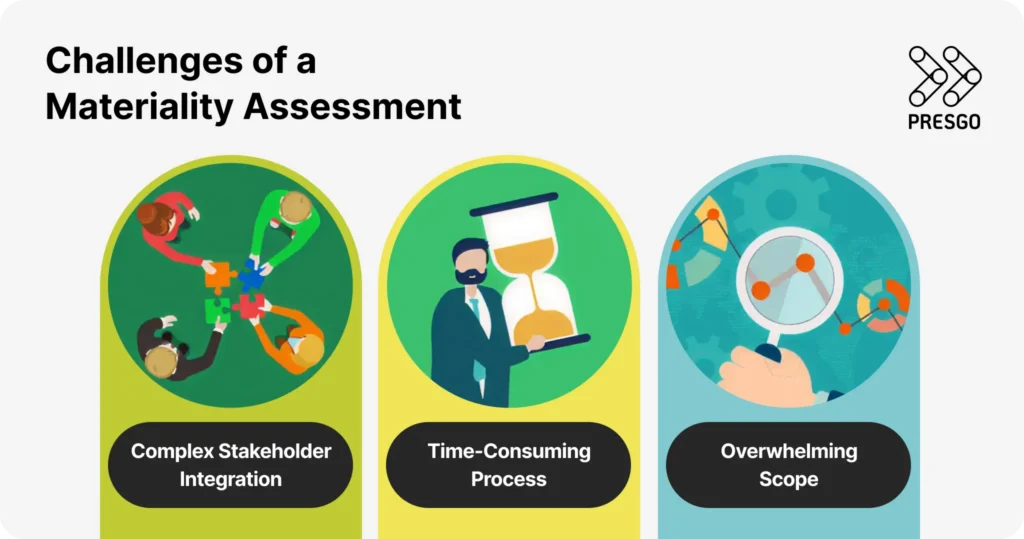
A materiality assessment can provide companies with valuable insights into their most critical issues. But while it has many benefits, conducting one also comes with its own set of challenges, which require strategic planning to overcome.
- Complex Stakeholder Integration: Balancing the views and expectations of various stakeholders can be challenging, as there may be conflicting priorities that require careful consideration and prioritisation.
- Time-Consuming Process: A thorough materiality assessment, especially one that involves a company’s entire value chain, can be resource-intensive and time-consuming.
- Overwhelming Scope: For large organisations with complex operations, determining the most material topics from a large number of ESG issues can be overwhelming, often leading to a lack of focus.
How to overcome these challenges?
- Streamline Stakeholder Engagement: Focus on engaging the most influential stakeholder groups and use existing feedback channels, such as surveys and interviews, to efficiently gather input without overburdening the process.
- Segment the Assessment Process: Break the assessment into manageable phases, starting with key operations or geographic areas, and gradually expand to include the broader value chain to help with the focus and effectiveness.
- Simplify Prioritisation: Use clear, simple ranking systems to prioritise material topics, distinguishing between those that have the greatest potential to impact business value and those that are less urgent. This keeps the focus on what matters most.
- Utilise ESG Software: These processes can all be simplified with the use of sustainability software that has tools for automation, collation, and collaboration.
Is materiality assessment a requirement for companies?
Materiality assessment requirements vary by jurisdiction and framework. Under the EU’s CSRD, double materiality assessment is mandatory for companies within its scope. Its revised compliance thresholds in 2025 cover a significant portion of large companies operating in or connected to European markets.
Regional and local jurisdictions have different regulations and specifications. In the case of Philippine companies, their PFRS framework is not explicit on a specific materiality assessment methodology, but disclosure requirements are built on the assumption that companies have already identified what’s material to them. Without that foundation, PFRS-aligned reporting becomes difficult to do with any credibility.
Beyond specific mandates, materiality assessment is becoming a baseline expectation across global investor and regulatory communities.
Case Studies: Businesses that Conducted Materiality Assessments
Companies have used sustainability materiality assessments to effectively identify and prioritise key issues and approaches that impact a company’s performance, stakeholder interests, and long-term sustainability. Here are three materiality assessment examples from companies:
Samsung
Samsung’s 2024 materiality assessment followed a Double Materiality Approach (DMA), considering the company’s impact on the environment and the external risks to its business. They identified 11 key material topics, such as climate change, water resource management, and product safety, based on an in-depth analysis of their value chain and stakeholder feedback. This holistic approach was designed to align with their corporate strategy and global sustainability goals.
Amazon
Amazon’s materiality assessment identified 26 sustainability topics using external research and internal analysis, including data from reports, regulations, and social media. The company prioritised issues like climate change, sustainable packaging, and responsible supply chain management, while also focusing on employee well-being, ethics, and innovation for long-term strategy.
Unilever
Unilever’s materiality process involved identifying sustainability issues that were considered risks or opportunities for their business, as well as those deemed important to key stakeholders. The company used extensive stakeholder research, including surveys from consumers, suppliers, and business partners, to assess and prioritise 11 material issues, including climate change, health and wellbeing, and sustainable sourcing. This process was aligned with their risk management framework and communicated through their annual reports.
Accurate ESG Materiality Assessments with Presgo
A materiality assessment lets a business highlight the most important ESG issues that align its strategies with stakeholder expectations for long-term sustainability. However, it can be challenging, requiring considerable stakeholder consultation, data analysis, and adherence to emerging regulations.
Using ESG reporting software streamlines the process for a more efficient and compliant assessment and reporting process.
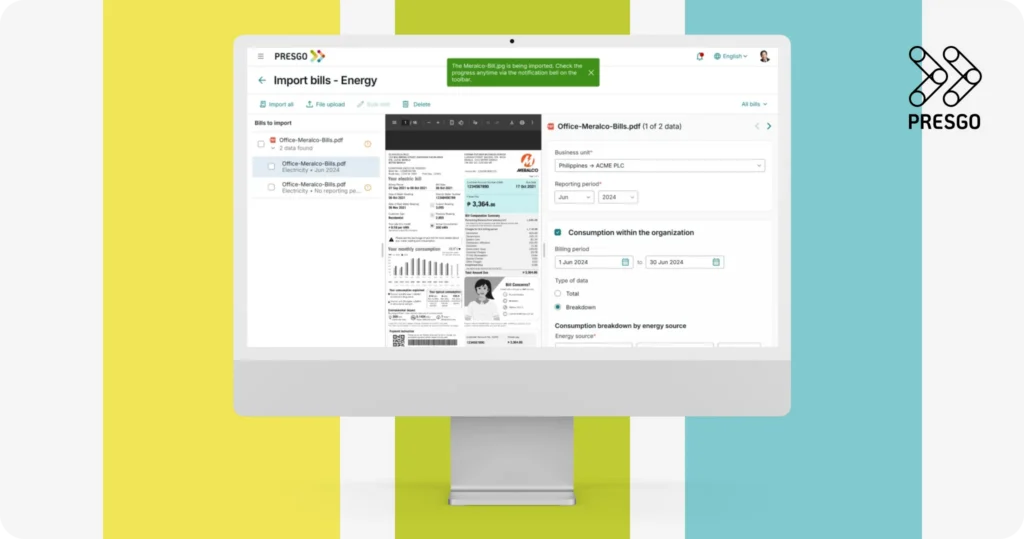
Presgo is an AI-first ESG reporting software that simplifies ESG materiality assessments. With modular reporting solutions, interactive dashboards and visualisation, and its automated tools, such as Optical Character Recognition (OCR), the company can benefit in:
- Conducting accurate materiality analysis and assessments
- Collating data into a centralised location
- Automating data collection workflow
- Aligning with global frameworks like GRI, SASB, and CSRD
- Collaborating seamlessly among internal teams, external experts, and stakeholders
- Providing a clear overview of progress towards ESG goals
By taking advantage of these features for materiality assessment, companies can elevate their sustainability performance and sustainability reporting. Ready to simplify your ESG reporting? Request a demo of Presgo today.